
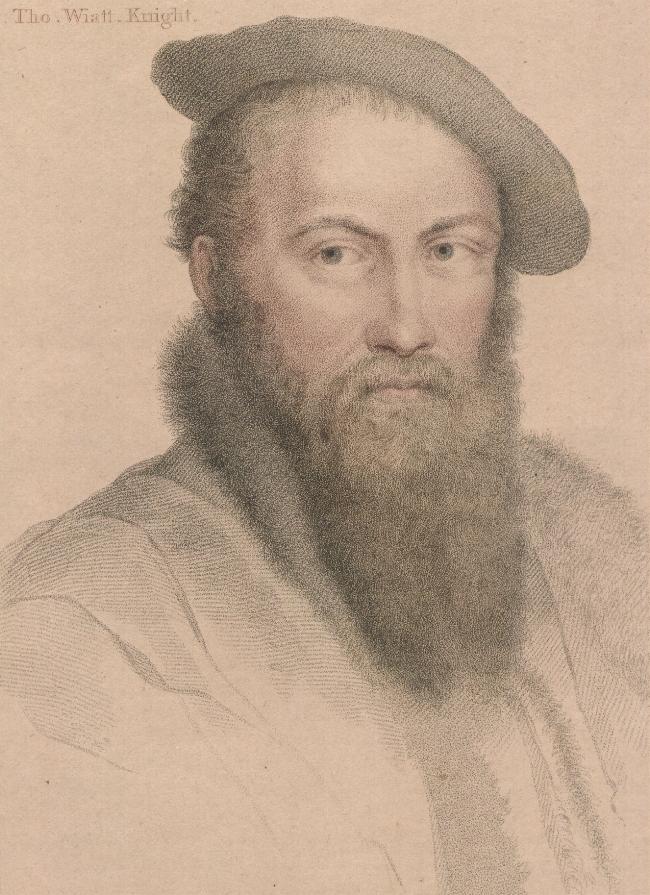
Sir Thomas Wyatt was born in 1503 at Allington Castle near Maidstone, Kent. His father Henry Wyatt was originally from Yorkshire. Thomas Wyatt followed his education at St. John’s College, Cambridge.
Thomas Wyatt married Elizabeth Brooke and they had a son who was also christened Thomas. Thomas was a fairly impressive personality in looks and in his behavior.
About Sir Thomas Wyatt
Contents
No wonder then that he was appointed the king’s ambassador to many places. He was even sent with Sir John Russell on an expedition to Rome to petition the Pope to annul the King’s marriage to Catherine of Aragon.
He was imprisoned in Rome after the Pope was imprisoned by the emperor Charles V. He, however, managed to escape and fled back to England.
Sir Thomas Wyatt Sonnets
Wyatt is considered unparalleled in the world of literature. He is the father of sonnets. Although he is known for his translations of the sonnets of Petrarch who was an Italian poet, Wyatt also wrote many of his own.
Unfortunately, none of Wyatt’s works were printed during his lifetime but his first printed work was the sonnets in the Tottle’s Miscellany that till date is on exhibit at the British Library.
He imitated the works of profound classical writers such as Seneca and Horace but in addition to this he also experimented with set styles in his own sonnets and developed the Poulter’s Measure from where there are couplets of twelve syllable iambic lines alternated with a line of fourteen syllables.
Thomas Wyatt Poems
He also experimented and developed the Rondeau which he extensively used in his poetries and satires along with the poulter’s measure. His work mostly echoed traces of all the great poets that influenced him. His work has the Senecan influence and Italian influence due to Petrarch.
However, he was also influenced by English eminent writers like Chaucer and used Chaucer’s word like Newfangleness in his poems. Wyatt was also rumored to have an affair with Anne Boleyn who was Henry VIII‘s suitor.
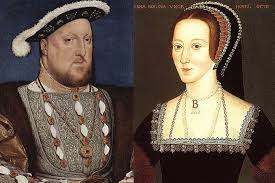
Wyatt wrote much poetry that reflects this unfortunate inclination that he developed. He was one of the suitors that were ousted by Henry VIII after his secret marriage with Anne. Wyatt was said to have been sent on a diplomatic expedition to Italy.
Sir Thomas Wyatt Works
However, there are records that Wyatt was also imprisoned due to charges of adultery with Anne. After Anne’s death, Wyatt was heartbroken and penned the poem “After great storms the calm returns”.
Wyatt was considered a less significant poet after his work was published posthumously. However, during the 20th century, the true value of his works began to immerse with the discovery and analysis of the complexities of his work.
Thomas Wyatt the Younger
It was fifteen years after his death in 1577 that his poems were published. Many years after Sir Thomas’s death, his son, also named Thomas Wyatt was the rebel leader during the time of Mary, Queen of Scots.
His rebel was known as Wyatt’s Rebellion. For his part in the rebel, Sir Thomas Wyatt, the younger was tried at a trial without any defense. In 1554, the younger Wyatt was executed and some portion of his property was restored to his son George.