
Dance in Elizabethan England
Contents
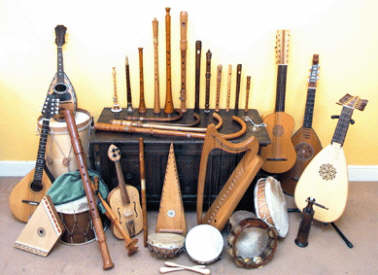
Elizabethan Music complemented the different forms of Elizabethan dance. Dancing was an extremely popular pastime during the Elizabethan era. Dancing in the Elizabethan era was considered “a wholesome recreation of the mind and also an exercise of the body”.
The emergence of different styles of music and new musical instruments combined with various experiments combining different instruments led to new dances being created. Elizabethan dance varied according to the social class.
Queen Elizabeth herself was an expert in dance and music and her influence on the dance of her era was profound. She practised different types of dances every day. She, therefore, demanded the entire court to know all the dances as well.
At one point, the popularity of dance and music reached such heights that political and romantic court battles were fought on the dancing floors instead of the battlefields.
The Galliard Dance
The court dances enjoyed by royalty, nobility and the Upper classes were often imported from Italy, Spain or France. These dance forms varied considerably from the energetic Galliard to the refined and stately Pavane. The lower classes enjoyed the more traditional country dances such as the Jig, Morris Dancing or the Brand or the Brawle which were closely associated with the customs and festivals celebrated in Elizabethan England.
Dances of the Upper Class
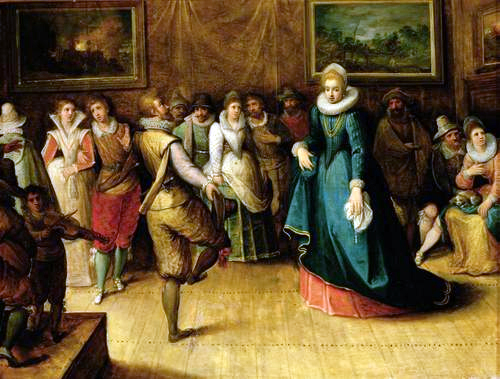
Elizabethan dances differed between the Upper and Lower Classes. The Upper Classes enjoyed new types of music at court. They had a taste for new music and new dances. Many courtiers travelled abroad and returned to the Elizabethan courts with dances from Italy, Spain and France. These foreign influences were found in the development of new Elizabethan court dances and music.
The Volt Dance Elizabethan
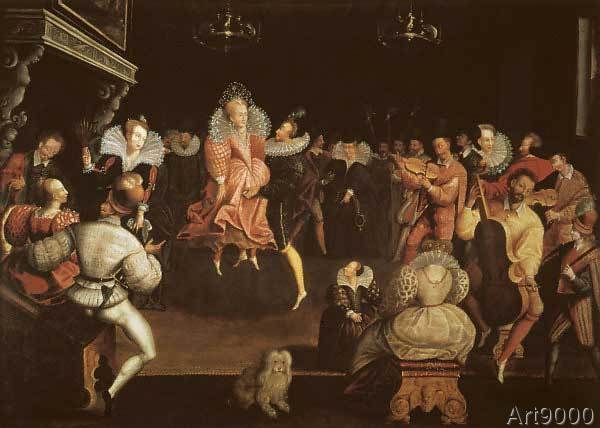
These new dances had to be learnt and Dancing Masters were suitably employed. These Elizabethan dances were highly sophisticated and stately with intricate steps and nuances, although the old favourite English country dances were still popular. Many of the Court dances were performed as couples and the suggestive Elizabethan court dance called the Volt was the only dance which allowed the dancers to embrace closely.
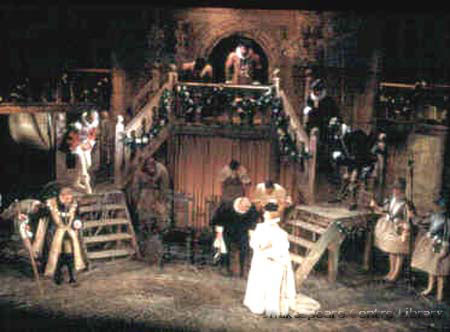
The form of entertainment called the Masque was popular with the Upper classes. Masques were accompanied by music and dance at the beginning and end of the performances and during the interludes. The dances which accompanied the masques had unusual names such as the ‘Tinternell’, ‘Maske of Queens’, ‘The Earl of Essex’s Measure’, Lord Zouch’s Maske and the ‘Turkeylony’ – many of these titles reflected the names of the patrons. The most important Elizabethan dances were the Pavan, Galliards and Almain.
Style of Dances of the Upper Class:
Many simple country dances were performed by the Elizabethan nobility and these are detailed in the appropriate section below. It was impossible for many of these dances to be performed by the Lower Classes as many of the instruments used were large, such as the keyboard instruments or not suitable for outdoor use.
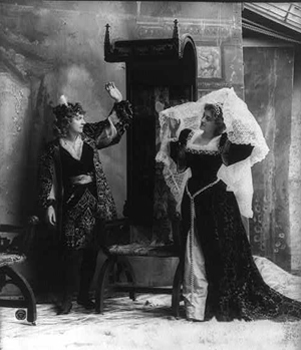
The following list details and the dances specifically performed by the Elizabethan Upper Classes:
- The Pavane, Pavan – A stately court processional dance where Elizabethan couples paraded around the hall lightly touching fingers. Pavane means peacock and the name of the dance derives from the sight of the trains of the women’s gowns trailing across the floor like a peacock’s tail. It comprised of a pattern of five steps, hence its alternative name ‘Cinque pas’
- The Cinque Pas meaning five steps, an alternative name for the Pavane
- The Galliard – A lively dance, originating from the fifteenth-century, which usually followed and complemented the Pavane
- Sinkapace – Another name for a Pavane
- The Almain – the Almain was one of the Elizabethan principal dances accompanied by keyboard instruments and lute music
- The Volt, Volte, Lavolta – Elizabethan court dance was the only dance which allowed the dancers to embrace closely. In this suggestive dance, the women were lifted high in the air by their male partner
- The Gavotte – Described by the Dancing Master Arbeau in 1588 it became known as ‘La Danse Classique’. Danced in couples in a circle to a medium tempo. Developed into the Kissing dance which probably accounts for its popularity!
- The Courant or Courante – Sophisticated, slow-moving dance which originated in France
- The Saraband – Another sophisticated, slow-moving dance which originated in France
- The Tourdion – Similar to the Galliard but a little more sedate
- Ballet – A formal and courtly Italian dance form established at the French court in the sixteenth century, It was originally danced both by courtiers but now danced by professionals
- Saltarella, Saltarello, Salterello – a fast dance of Italian origin similar to the Galliard
- The Canary – a Spanish dance described as as ‘gay but nevertheless strange and fantastic with a strong barbaric flavour’. Its popularity in France led to its importation into England
More Info On- Elizabethan Dances of the Lower Classes, Dancing and music, Drama, England Music, Plays, Musical Instruments